"PART-ING GIFTS"
Recently, a woman announced definitively that she was going to be an organ donor when she died. Her assuredness contradicted reality, as circumstances of death must mesh with stringent parameters in order for transplants to happen. In spite of good intentions, often transfers of innards to living recipients are not possible. Of course, there won’t be any utterance of “Darn, I am so disappointed!” coming from her if the potential donor is deemed an unsuitable candidate. But family members may feel sorely deflated, knowing that this woman had been hell-bent on having her internal leftovers benefit the lives of others.
Organ and tissue transplants
have evolved during the past century to the point where they are in the
forefront of people’s minds in connection with death and dying. Perhaps folks are less apt to consider
the alternative avenue for a whole body donation to support research,
education, and skill enhancement.
But think of the multitude of scientists, practitioners, technical
innovators, students, and varied personnel whose work relates to health and
quality of human life. Their best
teachers are apt to be the decedents who contributed their physical substance
for the enhancement of personal proficiency and societal progress.
Within its national network
of five tissue banks in different regions of the country, MedCure – a whole
body donation program founded in 2005 – provides unembalmed (frozen),
non-transplantable organs and tissues to medical research and education providers
around the world.

There is no cost to the
family, as long as the firm is contacted after death occurs instead of
a random funeral home. Its
personnel manage every detail, including transportation from the place of death
to the closest MedCure facility via arrangements with one of their contracted
funeral homes. Acquisition of the
standard death certificate and disposition permit is part of the process.
Tucked inconspicuously
behind one of many corporate enterprises lining a long road in Cumberland,
Rhode Island, an ordinary building belies the extraordinary operations underway
inside it. Besides serving as a collection center for distribution of physical
elements, this particular site is also a place of learning… a facility where
surgical skills are honed and educational lab experiences are conducted, thanks
to donor contributions of whole bodies.
Even high school students
can be exposed in this manner to the intricacies of the human body, sometimes
engendering an inclination toward health-related vocational pursuits or even
enlightenment that changes deleterious personal practices such as smoking.
The environment here is
modern and spacious, with state-of-the-art technology and knowledgeable
staff.
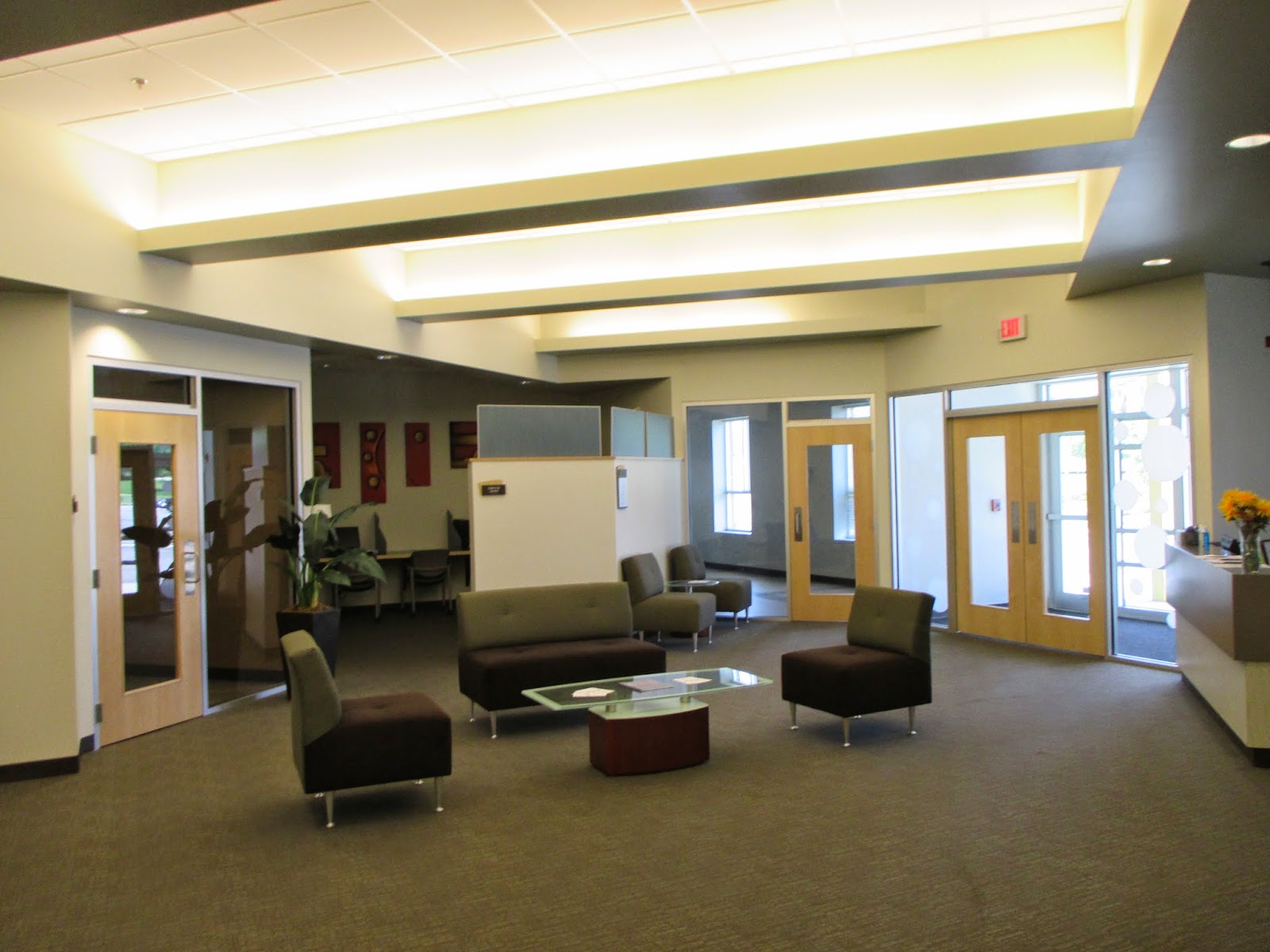
Lab managers are certified
as tissue specialists capable of preparing, managing, and monitoring specimens
in addition to assisting with procedures.
A 2500 square-foot laboratory space with fifteen surgical stations mimics
operating room milieus, featuring lights equipped with video cameras that relay
procedural details to learners situated in a nearby auditorium space that
accommodates up to one hundred observers.

Computer stations and a
locker room offer additional amenities for visiting bio-skills participants.

When hunger strikes, a large
room connected to a small kitchen is the place where catered meals are
provided.


Bodily donations can be
accepted from all continental states, with the exception of New Jersey and
Minnesota. There are no age restrictions. Some, but not many, disease
conditions would render specimens unusable. The more likely exclusions include HIV/AIDS, hepatitis B or
C, a history of intravenous drug use, incarceration or institutionalization,
and severe under- or overweight. Anyone
with terminal cancer can be pre-screened to determine eligibility. So this type of donation can be an
alternative to medical school donations, which may be more restrictive.
A circulating truck makes
the rounds between headquarters in Portland, OR and the sites in Henderson, NV,
Orlando, FL, St. Louis, MO, and Cumberland, RI to pick up and deliver the
precious resources. Besides the
facility in Rhode Island, the ones in Oregon and Nevada also have bioskills
laboratories on site.
Every specimen is tested and
must meet defined criteria before being distributed. At time of death a matching process follows a review of the
donor’s medical status to pair the bodily components with the most appropriate educational
or research applications. Later, the family can be apprised of the ways in
which use of the donated body were implemented.
When a decision to donate is
declared prior to death, donation forms are accompanied by a request for health
and social histories, including medical records.
A specimen for training
purposes is used only once, followed by cremation as soon as possible –
typically, within six to twelve weeks.
Family members have appreciated the container provided for the cremated
remains, which is a heart-shaped box.
So even if organ transplants
into living bodies is preferred as a way to utilize physical residuals,
consider a backup “Plan B” as a contribution to a body of knowledge.
_________________________________________________________________________


 Posts
Posts

