____________________________________________________________________________________________________________

Content here represents the voice of SIGNATURE SUNSETS, an informational initiative designed to broaden and brighten horizons in the funerary domain.

The material is an outgrowth of a pre-planning reference book, Pondering Leaves: Composing and Conveying Your Life Story's Epilogue, written by the author of this blog.

______________________________________________________________________________________________

Showing posts with label COMMUNITY AFFAIRS. Show all posts

Wednesday, October 5, 2016

GREENSPRINGS ANNIVERSARY CELEBRATION

Journey Journal... Newfield, New York

A DECIMAL FESTIVAL... From Square One To Compound Interest

On a sun-drenched and auspicious September day, conviviality was particularly apparent at the Greensprings Natural Cemetery Preserve.  Human spirits were flourishing here amid pastures of bodily extinction.  Living souls were fully engaged in activities, fueled by the horsepower of concerted efforts.  Evidence of collegial harmony uniting a bevy of workers and participants prevailed.  One of the original founders of the cemetery was first spotted in an orange safety vest, helping a cohort direct newcomers to parking spaces.  

A celebration was underway to mark the tenth anniversary of the burial property’s founding.  The occasion brought together the visionaries who had launched this ecological initiative along with supporters and community folks interesting in learning more about a green, yet golden, opportunity.  

A tent served as central headquarters for a program of activities.  


Under its canopy were a microphone delineating a presentation corner, tables bearing light refreshments, and a beverage bar where an attendant served wine, beer, cider, and soda. 
Guests could park themselves either on folding chairs or atop ancillary bales of hay.   


Amid platters of fruits, veggies, cheese, and cupcakes, flickering candles lent ambience to the already naturally tranquil milieu. 

An a cappella group launched the program and set the tempo for a sequence of performances that followed, which included juggling, magic, and music. 


Key players in the cemetery’s development delivered information, updates, and grateful acknowledgment of particular contributors.  

People learned that two hundred and forty bodies have been buried there, with about one thousand more plots having been purchased and reserved for occupancy.  Thirty additional acres of land had recently been acquired, thereby enlarging the parcel of one hundred acres.  Use of a portion of the new territory for a pet cemetery is under consideration.  

Donations are solicited for projects and expenses of all sorts.


There are many opportunities for volunteer engagement, either as a one-time contribution or on a regular basis.  Assisting with burial ceremonies or greeting mourners are among the possibilities, in addition to serving as a representative at events such as tours and fundraisers.  

Rolling up one’s sleeves to tackle physical tasks is another option.  An old farmhouse alongside the access road has been pegged as a potential facility where visitors would be able to gather.  But for that to happen, it must be spruced up and adapted for that purpose.  Cleaning efforts could also be undertaken in the small building that serves as office headquarters.  Help with maintaining buildings and grounds might entail painting, gardening, or mowing.  And a parking lot is sorely needed, particularly at certain times of the year when navigating over grassland becomes a weather-induced challenge.  

Manpower is sought also to remove invasive species from the newly procured thirty-acre property.  Such an initiative is an ongoing mission throughout the entire cemetery terrain.  Non-native Norway spruce trees have been cut down in one of the meadows, consonant with a recommendation by an ecological advisory committee.  An annual December event, dubbed “Greenery Day,” draws a substantial number of people.  Last year two hundred individuals were on hand to topple the overgrown, non-native trees.  Folks who participate in this venture take home the tree tops to display as Charlie Brown Christmas trees.    

So Greensprings continues to be a work in progress… progress that has been remarkable during the past ten years, energized by the commitment of core leaders as well as the volunteers who have provided impressive donations of time, effort, and monetary support.   

As the program ebbed, in a bow to Buddhist tradition for wishing people well, a leader sang phrases as part of a “Loving Kindness Meditation,” invoking communal responses and contemplation of sentient words:  “May I be a source of healing, may I bring peace, may my heart be open, may I be awakened to my true nature, may you be a source of true healing, be at peace, may all beings awaken to the light of true nature…”  

Before a rendition of the well-known song, “Simple Gifts,” was sung, the burial coordinator referenced the emotional ramifications of burials at Greensprings.  Having participated in many interments there while believing that “nature is nurturing,” she has observed that being in a beautiful place helps to absorb mourners’ sadness. 

But Greensprings is for everyone, not just the mourners and the bodies of their deceased loved ones.  All seekers of outdoor resuscitation are welcome to connect with the land there by taking walks and using the grounds. 


Following the agenda of activities, guests were offered an opportunity to choose from a menu of “field trip” opportunities.  An ornithologist would lead a group through the territory to scout for bird sightings and sounds, where migratory bobolinks thrive along with meadowlarks, Henslow’s sparrows, northern harriers, and other winged flutterers.  The wife of one of the founders, Carl Leopold (whose body was buried on the grounds), is now a trustee who would give folks an overview of the cemetery’s plants.  The most colorful option entailed accompanying a gourde puppet bedecked in autumnal orange through the meadows to distribute milkweed seeds for propagation of butterfly habitats.


Dauntless guests may have opted to be led to the old, uninhabited farmhouse where the leader offered to descend into the basement for a peek at its potential.  But a number of people chose what was perhaps a less formidable and more illuminating option: an abbreviated tour of the grounds with visits to a few gravesites.  


The first stop was for a look at demonstration arenas.  Two rock-delineated gardens contained examples of native plants that families can choose to plant over graves; one has plants and the other has a small assortment of grasses.  


Nearby, the ground is dotted with examples of flat stones that would be appropriate grave markers.  


Burrowed within adjacent territory is the grave warmer (fueled by propane) that can be used if necessary to thaw the ground prior to a winter burial.  


Upon observing gravesites, individuals were given answers to their inquiries.


Plot dimensions are fifteen feet square, assuring low-density layouts and ease of maneuvering around graves with a backhoe. 

For the most part, bodies are not embalmed unless there is an extenuating circumstance.  One such situation relates to transport of a body from a state where embalming is required by law for transport to a different state.  It was noted, though, that bodies have been transferred to Greensprings by plane from California, Texas, and Georgia, but were not embalmed.

In accordance with a New York state regulation, a funeral director must certify that a body has been brought to the site of disposition.  One time a family transported their loved one’s body in a truck and the funeral director came in his own car.  

Currently, the cost for a plot to accommodate a body is $1,000., with an additional $1,000. fee for opening and closing the grave.  Small plots (290” X 90”)  can be purchased for burial of cremated remains, located in a small section of the cemetery; the cost is $350. for the space and an additional $350. to cover the fee for the burial process.    

Greensprings is characterized by heterogeneity of plot offerings.  That is, except for a field designated for Jewish burials where only Jewish people can be interred (according to the same natural principles that define green burials), there are no sections specifically for ethnic, religious, or fraternal groups.  


Across the road from the Jewish area, an expansive field labeled, “Bobolink Meadow” is where winter burials can be accommodated.  


Though New York City cemeteries are bursting at the seams, at this cemetery in the western realm of the state there's plenty of room to grow.  It was estimated that there is at least sixty percent availability of plots on land that has been surveyed, with lots of additional space in territory where surveys have not yet been conducted.    

*****
There was palpable excitement among the worker bees who had organized this afternoon affair.  It had been a success, judged by the responses and effusive affect of those who had attended the proceedings.  As a performer steered his car toward the road, he opened the window and called out to one of the organizers, acknowledging that he had enjoyed himself and he’d like to be invited back sometime.

Yes, it’s possible to enjoy oneself in a cemetery!  At this particular one, in contrast to visiting conventional burial grounds, it doesn’t entail reinforcing familiarity through observation of redundant hallmarks.  There are no headstones bearing entertaining epitaphs or paved walkways for daily strolls.  Here, unblemished by manifestations of mankind as a different type of invasive species, there’s a chance for immersion in an atmosphere that’s essentially free of human intervention.  Here, it’s possible to enjoy sensorial absorption, enabling one to get in touch with a primordial essence of beginnings and endings – the nature of natural cycles.  

Here, the presence of both the living and the dead represents a celebration of this elysian estate and all that is over, under, and around it.  On this re-appropriated parcel of land, one can’t help but feel appreciation for the impassioned spirits of those who seek to sustain nature’s bounty.   

Thursday, July 16, 2015

GRIEVING of YOUTH

MENDING BROKEN TIES OF YOUNG LIVES

Childhood and adolescent phases ordinarily present challenges specific to one’s age.  A death in the family can potentially wreck the momentum of maturational growth.  Without intervention, the added stress of coping with the demise of a parent, sibling, or other pivotal figure in a young person’s life can threaten stability and interfere with the progression from one developmental stage to the next.  

A long time ago, when illness, death, and funeral proceedings all took place in home environments, children were on hand and part of what was going on, enabling them to interpret the end of life as a natural passage.  At some point, though, as funeral homes became the central sites for final affairs, young people were shielded from direct contact with the realities of life endings.  The general attitude was that they should be protected from the pain of loss. Their awareness of death was thwarted and their reactions perhaps intentionally minimized.  Circumvention of attention to emotional manifestations was considered justifiable based on assurance that, as resilient children, the kids would be able to bounce back from any trauma they suffered due to it.  

Modern psychology has reversed that stance.  Instead, a focus on childhood and adolescent grieving stems from a belief that they should have direct contact with matters of death and learn effective ways to cope with the loss it incurs.  This contemporary viewpoint has led to a substantial array of resources to guide young people in navigating through the emotions of separation they now can face head-on, under the supervision of trained professionals cognizant of varying needs characteristic of particular age groups.   

The National Alliance for Grieving Children serves as a nationwide resource for providers and anyone seeking awareness of suggested support measures.  Professionals can use it as a forum for sharing ideas and information to effect implementation in their respective communities.  Online education is a core aspect, in addition to the network’s hosting of an annual symposium, maintenance of a national database of children's bereavement support programs, and promotion of endeavors to enhance public sensitivity to the issues impacting grieving children and teens.   

As a sign of the times, often funeral homes cater to the death-related imperatives of children belonging to the families they serve.  Many have playrooms.  

Photo Site:  Anderson-McQueen Funeral Home, St. Petersburg, FL

Designated staff members may be trained to fulfill roles geared toward helping youngsters understand death while enabling them to be active participants during proceedings, in age-appropriate ways.  Sometimes funeral directors offer tours of their facilities for groups of children; the objective is to demystify death through exposure to the setting while enabling absorption of factual information in the absence of emotional entanglement.  

Throughout the nation there are initiatives tailored to meet the needs of bereaved young people and to help keep them on an even keel developmentally.  Effective approaches are promulgated through books, articles, presentations, and other means of communicating insights chronicled by way of empirical data and scientific studies.  Often schools are involved as liaisons, where staff glean competence via presentations and other tools.  A focus on remedial measures to help grief-stricken young people has become a specialty.  Training programs for personnel, participating adult volunteers, and peer support groups provide an educational backbone for these helpers’ engagement.

Children and teens confronted by personal losses come together in a variety of explicit settings where they have the benefit of integrating with others in similar situations.  In contrast to peer interaction within school environments, here in safe havens they are free to talk openly about death without feeling self-conscious or distancing themselves from classmates aversive to the topic.  The potential for a sense of isolation is offset through the camaraderie of social synergy with one another amid interactive activities. 
  
Photo Site:  The Children's Room, Arlington Massachusetts

An impressive array of programs and facilities includes weekend or full-time grief camps in addition to the dedicated physical centers.  Sometimes animal assisted therapy is employed, forging therapeutic partnerships with pets or other animals to enable more spontaneous communication.  As an alternative to traditional counseling sessions, equine therapy affords hands-on contact with horses through various programs around the country.  
Possibly more so than ever, the unique needs of bereaved youth are being recognized and addressed these days.  Under the guidance of compassionate comrades, those who have encountered a life-changing loss are being handled with care.  Through insightful interventions, they journey from the darkness of death toward restitution and fundamental reabsorption in accustomed lifestyles, yet ones that will never be quite the same. 

Photo Site:  The Children's Room, Arlington Massachusetts

Time will tell if such restorative regimens for today’s young folks will impact their attitudes toward death as adults.  Maybe in this “death-phobic” society they will be better equipped to confront matters of mortality more comfortably than the current population of adults – including those who may have experienced deaths of significant others during their childhoods.  If that turns out to be the case, then even in the absence of loss, perhaps death education initiatives for all children and adolescents could help generate attitudes of acceptance.  


____________________________________________________________________


Thursday, July 9, 2015

NATURAL BURIAL GROUND

Journey Journal... Fultonville, New York

A NEW BEGINNING AT THE END OF THE ROAD

The word “cloistered” might aptly describe the Fultonville Cemetery and Natural Burial Ground.  Though not really isolated from the mainstream world, at least it feels sequestered within a haven of established trees and wooded borders.  A stone’s throw away from the cacophony of highway sounds emanating from the New York State Thruway, access to it is less than a two-mile drive.  Yet within this shelter of seclusion, only bird songs and rustling leaves are audible amid the shaded, late afternoon splendor.  Though a housing development adjacent to the property hints of potential visual and auditory intrusion, there is a sense of insulated separateness.  

Photo Source:  Fultonville Cemetery Facebook Page

Founded in 1848 when purchased from the Protestant Dutch Church for conversion to a public cemetery, it bespeaks historical significance as well as present-day progress.  Among notable figures interred here were two United States Congressman from the 1800s era as well as veterans who served in various wars.  
  
In recent years this municipal asset has garnered interest because of its status as the first nonsectarian cemetery to offer natural burials in New York’s Capital district.  Conception of the idea took place in the mind of a high school student who came across an Internet article about green burials three years before the option materialized here.  Ryan Weitz, having been a student of a teacher who was also the town’s mayor and knew of his interest in matters of the past, had been appointed by the village Board as town historian – the youngest in the state.  For him, probably the cemetery was a major focal point of his attention.  He suggested that two wooded acres next to the established cemetery would be ideal as a site for natural burials.  The village Board unanimously approved his proposal.  

Over the course of a few months, public information sessions and hearings as well as open houses preceded the dedication ceremony that took place on October 5, 2013.  


Photos Source:  Fultonville Cemetery Facebook Page

As historian and originator of the project, Ryan Weitz led the proceedings, during which he referenced the words of Aldo Leopold, an ecologist and educator who was a key figure in promoting environmental ethics and wilderness conservation.  His germane encapsulation of organic processes spoke to the underlying principle of natural burials:  

                                           "A rock decays and forms soil.  
                                            In the soil forms an oak, 
                                            which bears an acorn, 
                                            which feeds a squirrel, 
                                            which feeds an Indian, 
                                            who ultimately lays down to his last sleep 
                                            in the great tomb of man to grow another oak.”

Public officials were in attendance at this event in addition to Mark Harris, author of the book, Grave Matters:  A Journey Through the Modern Funeral Industry to a Natural Way of Burial, which sheds light on the worthiness of green burials.  


Photo Source:  Fultonville Cemetery Facebook Page

The renowned proponent of the reincarnated practice declared a belief that even more than its positive effect on the environment and its affordability is the fact that a green burial “perpetuates life.”  Within such a framework, then, this type of burial ground is a place of life rather than death.  

This new offering, ostensibly of the modern era, may spark interest among travelers along New York’s well-traveled byway.  Easy accessibility adds to its allure as an alternative to the redundancy of cookie-cutter rest stops.  A turn off of a main thoroughfare and another quick turn shortly thereafter takes a visitor to this place of tranquil respite.

Coursing upward along a gradual hill, images of traditional stone monuments come into view, rendering familiarity of convention.  


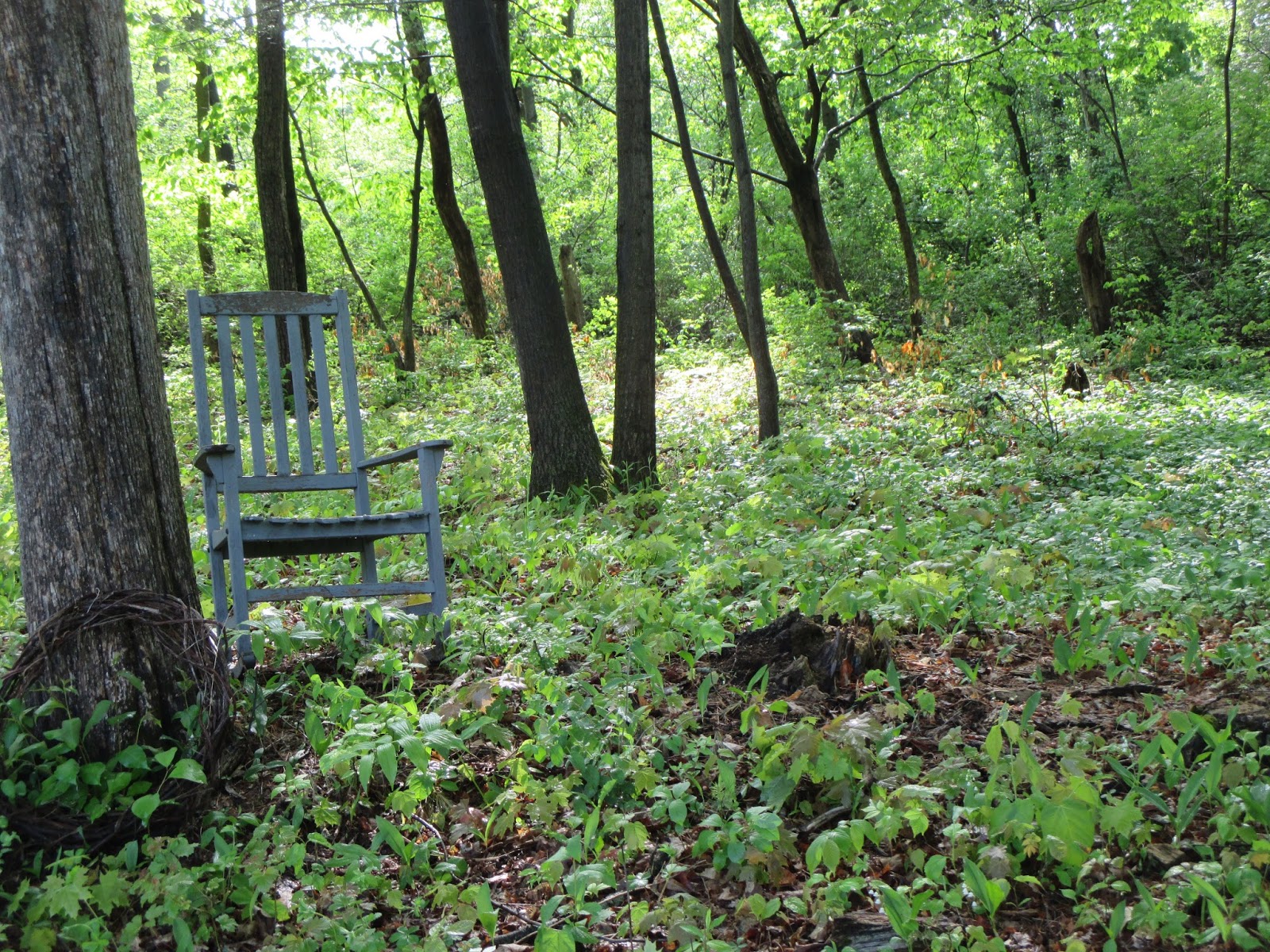
But an unusual element interrupts an interpretation of sameness.  Rocking chairs alongside a few grave sites invite repose – a novelty of note.  


The journey continues along a dirt road until reaching the end of it by an open field of interment sites.  Yet after scanning the property’s layout, a primary mission to find the latest ecologically friendly addition to the cemetery may not necessarily be accomplished.  Exploration on foot, likewise, might be futile.  


Foiled by the absence of a sign marking the natural burial section, a palpable sense of defeat could threaten… that is, until spotting another rocking chair.  This one in a nakedly wooded area off to the side of the common burial grounds is bound to ignite conjecture that the pursuit has not been in vain.


At the time of inauguration, ten-foot by ten-foot burial plots here cost $500. for Montgomery County residents and $700. for non-residents.  Pre-need purchases afford interment rights only, without designation of a specific location.  According to a practice of sequential burials, interments take place in order of occurrence, within space that is available at the time. 


Imperatives reflect stipulations common to natural burials in general, namely, proscriptions that preclude infusions of chemical preservation, the use  of concrete or steel vaults and liners, cut, machined, or polished memorial stones in any form, alterations to existing vegetation, and artificial flowers or other types of decorations.  

Bodily clothing or wrappings must be made of natural fibers and containment must be in biodegradable receptacles.  Anything deposited in the ground in conjunction with a burial is necessarily biodegradable.  

Native natural stones may be used as grave markers and may be engraved or carved.  


Unfinished wooden memorial structures are acceptable also.


Native plants and grasses except for trees may be planted over a grave as a memorial.  
A list of approved plants is available.  


Live flowers on a grave are also acceptable.

During growing season, the entire cemetery is bedecked with floral adornment.  Evidence of involvement and community pride is apparent through Facebook posts, where pictures of donated potted plants and flowers abound and availability of memorial plantings is announced.  Beyond the blossoms, a pronouncement alerts followers that among the assortment of wild strawberries, raspberries, or blackberries, a certain species of them is ready for picking.  A suggestion to stop by for a stroll to enjoy the latest blooms complements a separate notation that this is a perfect place for a man and his dog to spend an afternoon.  

In this quaint, off-the-beaten-track village of fewer than a thousand residents (named for Robert Fulton, inventor of the steamboat), here lies a cemetery of significance.  An Old World, traditional  flavor honors the past amid a contemporary, burgeoning trend toward ecological sustenance in the future.  The participation of local folks in the cemetery’s maintenance, their concerted efforts, donations of embellishments, and homespun touches render this a welcoming milieu that truly embodies a reference to death as “going home.”

Monday, June 8, 2015

PET CEMETERY CIRCUS

JOURNEY JOURNAL... Venice, Florida

An ENDING To Launch A BEGINNING – 

With PAWS, PANTALOONS, and STEAM WHISTLE TUNES

It was a life celebration fit for a king… or, in this case, a dog.

Imagine visiting a cemetery when your companion suddenly beckons you to “look at the clown going by on the road over there.”  One might immediately assume an errant driver was speeding recklessly in this designated zone of quiescence.  

But, no, this was a literal reference to an actual clown rather than the appointment of a derogatory assignation.  For heaven’s sake!  Clowns don’t belong at a cemetery!  Or do they?  

On February 16, 2013, amid hallowed burial grounds at Venice Memorial Gardens, there was no need to admonish anyone with a directive to “quit clowning around.”  In fact, in this milieu that ordinarily invokes subdued reverence, antics and activities common to the Big Top were the order of the day.  Against a backdrop of crypts and columbaria, a circus of sorts “came to town.”

It was a sunny day when the circus theme materialized here to commemorate the life and conduct the burial of a dog named Gizmoe, who had been a cherished companion of one of the funeral directors.  Her interment served as a prelude to the grand opening of the cemetery’s new pet burial section half an hour later.

Photo Source:  Farley Funeral Home - Venice Memorial Gardens Event Announcement

The honored decedent’s pink casket was actually an urn vault utilized for this alternative purpose.
Photo Source:  ICCFA Magazine, Dorothy Snyder Photography 

The fete began with the arrival of a carnival entourage. The adapted casket was on a wagon pulled by a singularly notable pallbearer of the day – Lucky Star, a miniature white horse who later showcased a series of tricks.  Her owner served as the circus ringmaster. Chucko, a former Ringling Brothers clown, played a pivotal role throughout the conjoint event as a prominent figure during the service and grand opening proceedings.  Two grief therapy dogs from the Florida Humane Society – a golden doodle and a long-haired dachshund – were at the rear of the processional.  


Photos Source:  ICCFA Magazine, Dorothy Snyder Photography 

A bone-shaped arrangement of white flowers with pink ribbons and sparkles accoutered the casket.
Photo Source:  ICCFA Magazine, Dorothy Snyder Photography 

The event was open to the public, including canine companions.  Eighty-four humans and sixteen dogs attended the committal service, conducted by two of the cemetery’s funeral directors under a pergola.  Public officials and local media personnel were on hand to glean material for news articles and television documentation.  


Photo Source:  Dorothy Snyder Photography 

The celebrant-led service included references to Gizmoe’s typical behaviors and characteristics.  Individuals who shared her life relayed reminiscent experiences.  A popular poem, “The Rainbow Bridge,” was read, which inspires comfort by alluding to the possibility of pet owners reuniting with their pets once they, too, have died.  Family members released ten pink balloons prior to the release of fifty multi-colored, circus-themed balloons amid a backdrop of relevant musical pieces.  

Photo Source:  ICCFA Magazine, Dorothy Snyder Photography 

Pink rose petals lined the dog’s grave.  After placement of the casket in it, some were also sprinkled on top of it. 

Photo Source:  ICCFA Magazine, Dorothy Snyder Photography 

The distinguished dog’s personality was captured even for her burial.  Because she had been anti-social, two spaces were utilized, with her body facing backward, so no other animal’s body would be buried close to her at a later time.  The plot is located in the section of the cemetery designated for upright markers.  

An unmistakable celebration of life was the order of the day on this occasion when an esteemed pet was laid to rest.  It was accentuated by clowns, calliope background music, balloons, popcorn, snow cones, and cotton candy.


Photos Source:  ICCFA Magazine, Dorothy Snyder Photography 

The theme was maintained throughout the grand opening ceremony that followed Gizmoe’s affair.  Though this type of milieu ordinarily is conspicuously uncommon in a cemetery, if ever a circus would appear on burial grounds anywhere, the Sarasota environs would be a logical place.  It oozes Ringling Bros. and Barnum & Bailey history and is still percolating with the company’s people and artifacts.  Because of its infiltration here, in the ‘40s and ‘50s this epicenter for a popular pastime became known as a circus town.  Accommodations for “The Greatest Show on Earth” included winter headquarters in Sarasota, often motivating personnel and their descendants to establish permanent, lifelong residency here.  A museum now houses an extensive art collection from their world travels as well as circus memorabilia, such as wardrobes, props, and equipment along with newspaper clippings and other documentary accounts. 

So it’s not surprising that authentic performers would be on hand for this special event.  In fact, three circus dynasties – the Espana, Anatasini, and Herriott families – were represented.  Entertainment included a classic spinning plates routine, acrobatics, and spins a la the German wheel and the “steel wheel of destiny.”

Photo Source:  ICCFA Magazine, Dorothy Snyder Photography 

Antics of trained pups were especially germane, given the nature of the occasion. 

Photo Source:  ICCFA Magazine, Dorothy Snyder Photography 

Of course, a festival with this motif called for edible embellishments.  A Venice caterer provided hors d’oeuvres – pizza bites, finger sandwiches, and pigs in a blanket.  A local supermarket made it possible for the canine and feline guests to enjoy treats as well.  

After the main events, people were given an opportunity to tour the grounds in golf carts, which included visits to the pet crematory.  


Photos Source:  Farley Funeral Homes -Venice Memorial Gardens Pet Cemetery Website

Needless to say, this was a distinctive and memorable way to introduce the community to the addition of pet services at this memorial park.  The blueprint that had been conceptualized in response to a current funerary trend had been transformed into a new facility.  
Photo Source:  Farley Funeral Homes -Venice Memorial Gardens Pet Cemetery Website

And in the process of publicizing its availability, the human tendency to feel remarkable affection toward pets had been colorfully accentuated.  

For now, Gizmoe’s headstone dominates the landscape of this heavenly animal kingdom. 


As time passes, the local canine celebrity will have more company within this acre of burial territory. Graves for other animals’ cremated or whole body remains will increasingly appear. 


If an owner wishes to stay close to a beloved pet, human graves adjacent to the pet section can accommodate that wish.  

Services will continue to be conducted under the pergola that serves as the central focal point for the pet burial grounds.
  

Meanwhile, under a headstone remindful of her memorable memorial gala, Gizmoe is resting in peace. 


Content Resources:

ICCFA Magazine: March-April 2013


________________________________________________________________________